
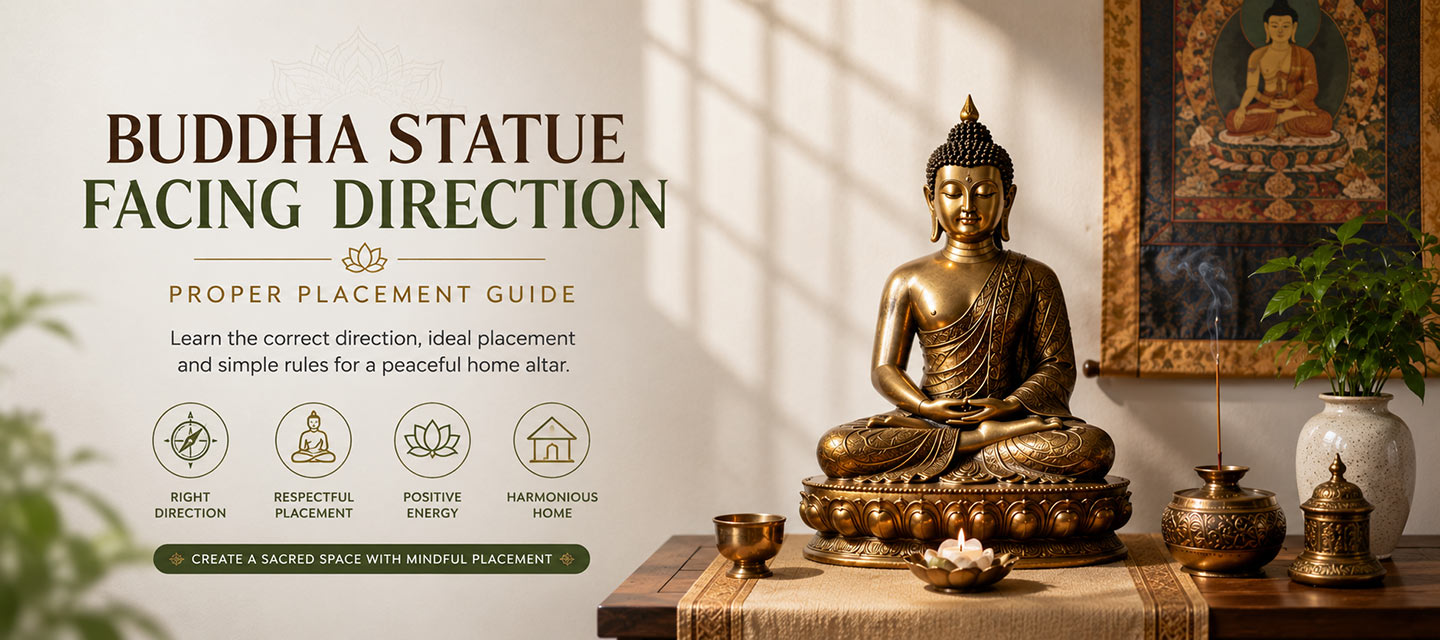
Many people wonder about the correct buddha statue facing direction when setting up a home altar or meditation space. While there is no single strict rule, respectful placement can help create a calmer and more meaningful environment.
In Buddhist practice, the most important thing is not superstition or fear, but creating a clean, respectful, and supportive space for mindfulness and reflection.
Buddha Statue Facing Direction and Placement
A Buddha statue should generally face into the room rather than toward a wall. This helps create a stronger sense of presence and makes the altar feel more welcoming and intentional.
Many people place the statue:
- In the main living area
- In a meditation room
- On a clean and elevated shelf
- Facing the open space of the room
The goal is to create an atmosphere that feels calm, balanced, and respectful.
Should a Buddha Statue Face East?
Some traditions prefer east-facing placement because the east symbolises the rising sun and enlightenment.
However, east-facing placement is optional and not mandatory. The overall condition and energy of the space are usually more important than strict directional rules.
Can a Buddha Statue Face the Front Door?
Yes, in some homes a Buddha statue may face the entrance area if the environment remains peaceful and uncluttered.
Many people feel this creates a calming and welcoming atmosphere when entering the home.
However, avoid placing the statue:
- Directly in a busy walkway
- Beside shoes or storage clutter
- In noisy or chaotic locations
Where You Should Avoid Placing a Buddha Statue
A Buddha statue should be treated respectfully and placed thoughtfully.
It is generally recommended to avoid placing a statue:
- Directly on the floor
- Inside bathrooms
- Beside rubbish bins or laundry areas
- In heavily cluttered spaces
Even a simple altar can feel meaningful when the space is kept clean and intentional.
Small Home? Keep It Simple
You do not need a large meditation room to create a supportive environment.
A small apartment or quiet corner can still become a peaceful place for practice when arranged carefully.
Many people use:
- A small shelf
- A simple table
- A clean corner with natural light
The most important thing is sincerity and mindfulness—not perfection.
Common Mistakes to Avoid
- Placing the statue directly on the floor
- Treating the altar as decoration only
- Overcrowding the space with too many objects
- Allowing clutter to build around the altar
A simple and respectful setup is often the most effective.
Need Help With Your Setup?
If you are preparing a new statue, you may also wish to learn about our Buddha Statue Filling (Zung) service.
We also provide respectful guidance for:
- Buddha statue placement
- Home altar setup
- Statue preparation and filling
- Sacred space arrangement
Need personalised support? Book a consultation.
Frequently Asked Questions
Which direction should a Buddha statue face?
A Buddha statue should generally face into the room and be placed respectfully in a clean and peaceful environment.
Can a Buddha statue face the front door?
Yes, as long as the area remains calm, respectful, and uncluttered.
Is east-facing mandatory?
No. East-facing placement is traditional in some practices but is not required.
Can I place a Buddha statue in my bedroom?
Yes. Many people place a Buddha statue in their bedroom, especially in smaller homes or apartments. The space should remain clean and respectful.
Final Thoughts
The correct buddha statue facing direction is ultimately about creating a respectful and supportive environment for mindfulness and daily practice.
Whether your altar is large or small, a calm and thoughtful setup can help bring greater clarity, balance, and peace into your home.