
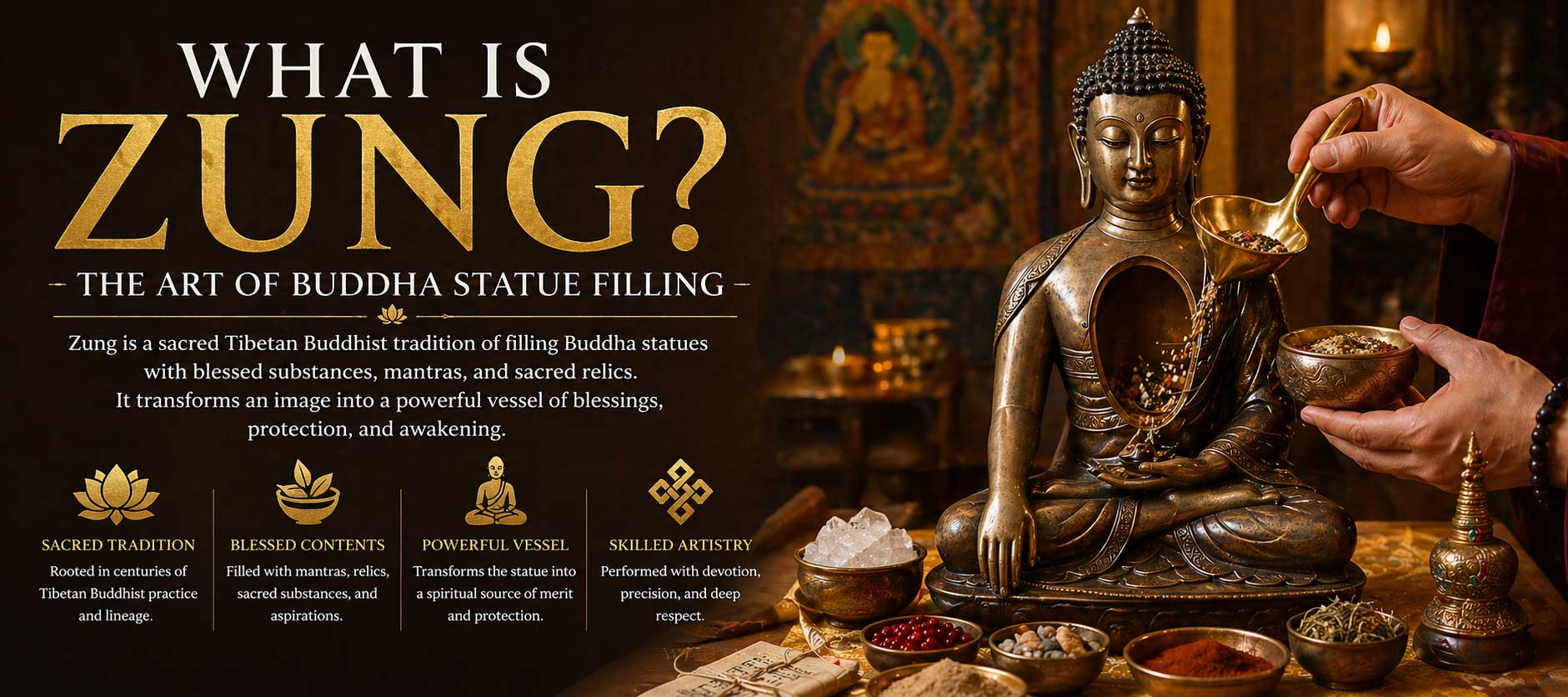
Zung is the traditional practice of filling a Buddha statue with sacred contents before consecration. In Tibetan Buddhist tradition, this process transforms a statue from a beautiful object into a meaningful support for practice, devotion, and spiritual connection.
The filling may include mantras, prayers, blessed substances, offerings, incense, herbs, and other sacred materials prepared with respect and intention.
What Does “Zung” Mean?
In simple terms, zung refers to the sacred materials placed inside a statue. These contents symbolically support the enlightened body, speech, and mind of the Buddha or deity represented by the statue.
Without filling, a statue may still be beautiful, but it is considered incomplete for traditional spiritual use.
Why Buddha Statues Are Filled
Buddha statue filling is done to create a proper sacred support for practice. The statue becomes a focal point for meditation, offerings, prayer, and daily mindfulness.
- It prepares the statue for consecration
- It honours the deity or Buddha represented
- It supports spiritual practice at home or in a shrine
- It helps maintain the traditional integrity of the statue
What Is Placed Inside a Statue?
The exact contents may vary depending on lineage, teacher guidance, statue type, and tradition. Common zung materials may include:
- Printed mantras or prayer scrolls
- Blessed substances
- Incense or aromatic offerings
- Symbolic herbs or grains
- Precious or semi-precious materials
- Offering substances representing abundance and purity
These materials are not placed randomly. They are arranged with respect and symbolic meaning.
The Spiritual Meaning of Statue Filling
Filling a statue is not only a physical process. It represents inviting sacred qualities into the form of the statue.
The outer statue represents enlightened presence. The inner filling represents sacred speech, intention, blessing, and spiritual completeness.
How the Zung Filling Process Works
Although methods can differ between traditions, the general process usually includes:
- Cleaning and preparing the statue
- Preparing the sacred filling materials
- Rolling or arranging mantra scrolls
- Placing offerings and blessed substances inside
- Sealing the base respectfully
- Completing prayers or consecration where appropriate
Why Proper Preparation Matters
Before filling, the statue should be clean, dry, stable, and respectfully handled. Dust, moisture, or loose debris inside the statue may affect both the practical and symbolic quality of the process.
Proper preparation helps ensure the statue is ready to receive the zung materials with care.
Can You Fill a Buddha Statue Yourself?
Some people may prepare simple offerings themselves, especially for personal practice. However, traditional zung filling is usually done with guidance from someone who understands the materials, symbolism, placement, and ritual process.
If the statue is important, valuable, or intended for long-term practice, proper filling is recommended.
Zung and Consecration: Are They the Same?
Zung filling and consecration are connected, but they are not exactly the same.
- Zung filling refers to placing sacred contents inside the statue.
- Consecration refers to the blessing or ritual activation of the statue.
In many traditions, filling comes first, then consecration follows.
What Happens After a Statue Is Filled?
Once filled and sealed, the statue should be treated with care and respect. It should be placed in a clean, elevated location such as a shrine, altar, meditation space, or peaceful room.
Daily practice may include cleaning, offerings, mantra recitation, or quiet meditation in front of the statue.
Common Mistakes to Avoid
- Filling the statue without cleaning it first
- Using random or unsuitable materials
- Leaving moisture inside the statue
- Forcing materials into the statue carelessly
- Opening or disturbing the seal after filling
Why Zung Matters
Zung is a quiet but powerful part of Buddhist statue practice. It reminds us that true sacredness is not only seen on the outside. It is also cultivated within.
Through proper filling, a statue becomes more than a form. It becomes a meaningful support for devotion, mindfulness, and spiritual growth.
Prepare Your Statue With Respect
If you have a Buddha statue that has not been filled, or if you are unsure whether it has been properly prepared, traditional zung filling can help complete its spiritual purpose.
A well-prepared statue supports a more meaningful altar, a deeper practice, and a stronger connection to the qualities it represents.