
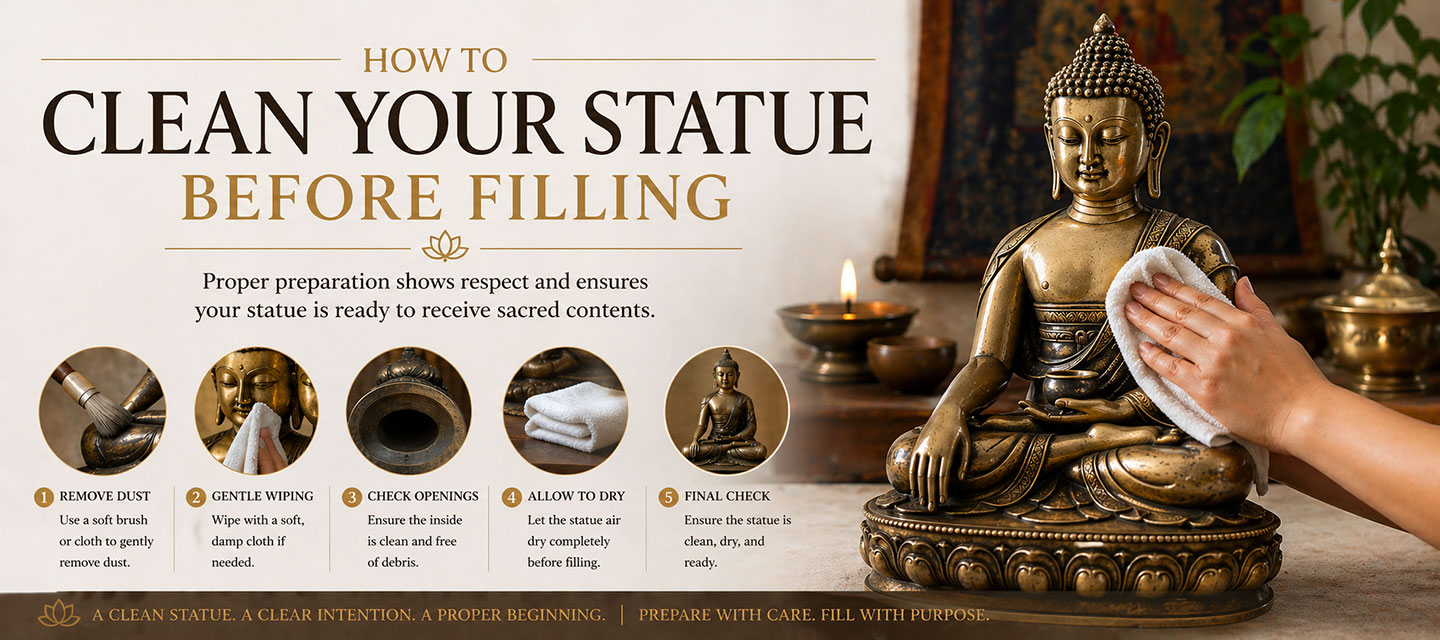
Before performing any filling or consecration, your Buddha statue must be properly prepared—both physically and respectfully. Cleaning* is not just about appearance; it ensures the statue is ready to receive sacred contents without obstruction or impurity.
*Cleaning methods follow conservation principles used by the Smithsonian Institution and Tibetan traditional method.
1. Begin with a Clear Intention
Take a moment to approach the process mindfully. In many traditions, preparation begins with awareness and respect. This aligns your actions with the purpose of the filling ritual.
2. Remove Dust and Surface Particles
Use a soft, dry microfiber cloth or a gentle brush to remove
dust from the entire statue, including crevices.
Avoid water at this stage if the material is unknown. Museums such as the Smithsonian Institution recommend starting with dry cleaning methods to prevent damage to delicate surfaces.
3. Gentle Wiping (If Needed)
If the statue has visible residue, lightly dampen a soft
cloth with clean water and gently wipe the surface.
Do not use:
- Chemical
cleaners
- Alcohol-based
solutions
- Abrasive
materials
Conservation guidance from the The British Museum emphasises that harsh cleaning can permanently alter or damage sacred and historical objects.
4. Focus on Openings and Internal Space
If your statue has a base opening (where filling will
occur), ensure:
- No
dust or debris remains inside
- The
interior is completely dry
- No
loose fragments are present
This step is critical, as any obstruction can interfere with the proper placement of sacred materials.
5. Allow the Statue to Fully Dry
After cleaning, let the statue air dry naturally. Do not use
heat or direct sunlight.
Proper drying ensures the internal environment is stable before sealing, a principle also reflected in professional object care practices (see conservation guidance from the Canadian Conservation Institute: https://www.canada.ca/en/conservation-institute/services/care-objects.html).
6. Final Check Before Filling
Before proceeding:
- The
statue should feel clean and stable
- No
moisture should be present
- The
surface should be free from oils or fingerprints
At this stage, the statue is physically ready for filling.
Why This Step Matters
A properly cleaned statue allows the filling process to be carried out respectfully and without interference. It also reflects your intention—care, clarity, and readiness.
Skipping this step may not seem significant, but it directly affects both the practical outcome and the symbolic integrity of the process.
Preparation Leads to Proper Consecration
Cleaning is the foundation. Once complete, the statue is
ready for the next stage: traditional filling and sealing.